
A Hawk’s Landscape
H is for HawkAs Helen and Mabel repeatedly cross the same fields, their distinct attention and shared history turn a working landscape into a place of memory and meaning.
increasing Bearing strength in each event
 decreasing
Bearing strength in each eventdecreasingLearning the Hill
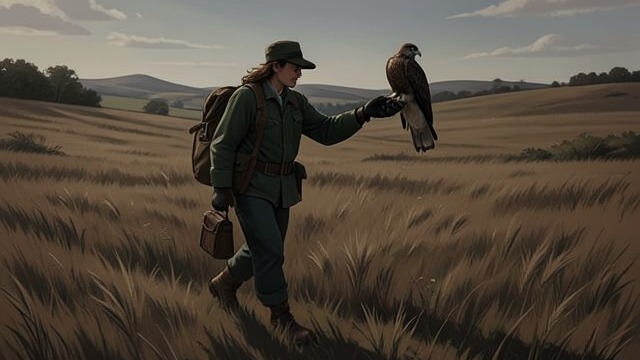
A Field Becomes Legible
Human Orientation
Helen begins learning tracks, hedges, warrens, and the places where animals are likely to move. Her knowledge accumulates through repeated walks rather than through ownership of the land.
The Hawk’s Attention
Mabel notices distant movement, cover, and routes Helen cannot readily detect. The human and hawk begin reading the same terrain through different senses.
Their shared practice creates familiarity without making their perceptions identical.
The Places Mabel Remembers
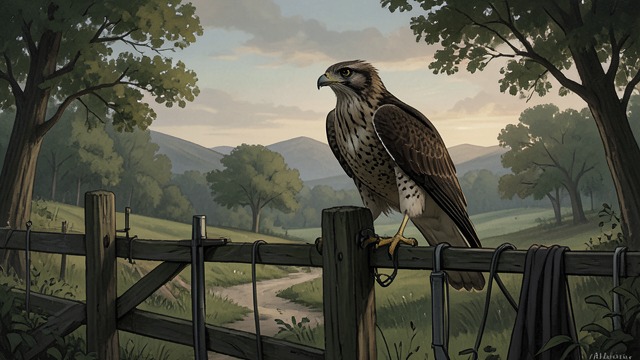
A Hawk’s Local Patch
Returning to Known Spots
Mabel makes detours to check places where quarry has appeared before. Her decisions reflect memory and practical expectation rather than obedience to Helen’s preferred route.
A Shared Map
Helen recognizes that the hawk is building a landscape of significant places, much as she did in childhood. Their histories overlap while remaining distinct.
Repeated attention makes the fields more than scenery.
The Hedge and the Pheasant
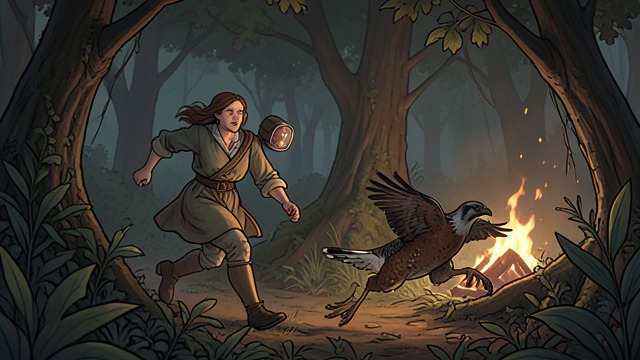
A Pursuit Through Cover
The Hidden Quarry
A pheasant rises near a hedge and Mabel follows it into tangled cover. Helen must run after the hawk, trying to infer what she sees while moving through unfamiliar ground.
A Changed Perception
For a moment Helen experiences the event as a set of positions shared among hawk, pheasant, and human. The landscape becomes an active field of choices rather than a view to observe.
The hunt inscribes an event into both her memory and the terrain.
The Chalk Valley
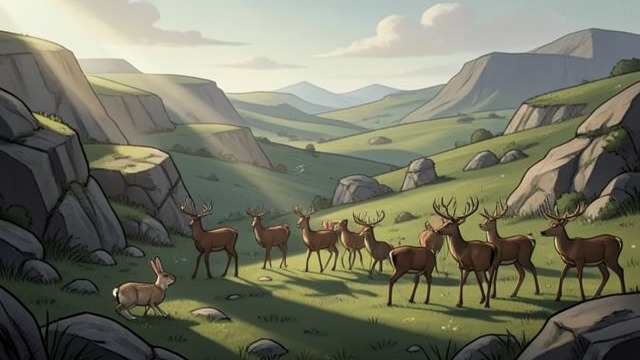
A Wider Country
The Animals Gather
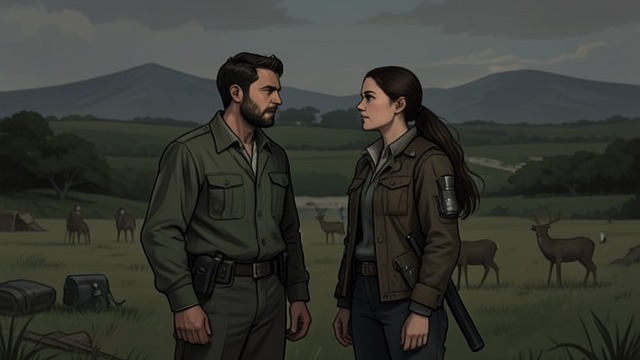
Helen follows Mabel’s attention beyond a familiar boundary and sees a hare and a herd of deer in a chalk valley. The scene is beautiful but also raises questions about access and belonging.
Running Through History
The animals flee in different directions, and Helen remembers that many familiar species and land uses have histories of introduction, farming, and trade. The landscape is not a timeless inheritance.
Observation opens into historical responsibility.
Walking Home Together
Shared Secrets of Place
A Familiar Greeting
Helen meets a retired couple who have seen the deer before and know their usual numbers. Their conversation briefly turns the landscape into a shared local experience.
A Rupture in Belonging
The man then frames the deer as evidence of an exclusionary idea of Old England. Helen leaves without answering, troubled by how easily shared beauty becomes a claim of ownership.
The walk home carries both affection for place and resistance to its misuse.
the first weeks of hawking outside Cambridge
winter, after Mabel has hunted repeatedly on the hill
autumn, during Mabel’s first pheasant pursuit
late winter, during a walk beyond the familiar hedge
near the end, after an encounter with a local couple
